Wednesday, August 11, 2010

State of the Art Navy vs. State of the Art Missiles

The implication here is that, if push comes to shove, the US Navy is a dinosaur waiting to become extinct. I heard a similar story the other day about how Iran has hundreds of these anti-ship ballistic missiles, should the US or Israel try something stupid. Just search on "iran dongfeng 21d"...

From Prairie2.com (whom I first heard on Mike Malloy's show):


Monday, August 9, 2010

Would you like rice with your Cold War Special?

The USS George Washington (CVN-73) spent the weekend cruising 200 miles off shore from Danang, The Socialist Republic of Vietnam. What’s going on you say, does Nike need negotiating leverage for that new sneaker plant? Officially the “G-Dub” was there to commemorate the 15th anniversary of the normalization of relations between the US and SRV. It did however bring along 4 million pounds of bombs, seventy aircraft and 6000 men and women ready to go to war at the sound of the claxon.

Based in Japan the “G-Dub” is widely believed to carry a typical deployment of 100 nuclear warheads. Japan has revealed recently that they have always turned a blind eye to this despite official policy prohibiting nuclear weapons on their soil.

Were the Vietnamese upset with this show of force just outside their territorial waters? No, in fact they could not have been more pleased as they chose the location. This is the part of the South China Sea that they claim as their own that includes a number of small islands known as the Spratly and Paracel Islands. These islands are the reason Hanoi and Washington are getting so cozy militarily.

The super carrier task force arrived off Vietnam having just completed joint exercises with South Korea and during the entire trip from Japan they were shadowed by a number Chinese warships. You see Beijing claims absolute sovereignty over the entire South China Sea, its islands, fishing grounds, oil & gas reserves and the sea lanes themselves. They don’t care much for trespassers but so far have been out gunned by the USN.

Vietnam has tried very hard to cultivate relations with the US, especially after the collapse of their primary benefactor, the Soviet Union. Before, during and after the US-Vietnam War, the Vietnamese were at war with China and repelled several invasion attempts that killed large numbers on both sides. The third and final invasion took place in 1979 and China withdrew after taking heavy losses but looted and laid waste to the northern part of Vietnam on the way out.

China has made no secret of the fact that at some point they intend to throw the US out of its South China Sea. To press home that point they have recently announced the pending deployment of a new generation of hyper-sonic anti-ship missile called the Dong Feng 21D. With a large conventional or nuclear warhead and a 900 mile range they are reportedly capable of defeating any counter measures and intercepting a moving target. Of course at 6000 miles per hour it closes the 900 miles in 9 minutes, so even at flank speed a carrier would only move maybe five miles, not quite like shooting fish in a barrel but close. Some reports are that the new missile may have a much longer range on the order of 2000 miles.

There is a debate about when the weapon will be deployable, it could be ten years or maybe less than two. There is no question that China is capable of producing such a weapon thanks to technology sharing by American companies like Boeing and Lockheed. In order to get access to cheap manufacturing, US companies are required to turn over information that prior to the Bush Administration people went to prison for giving up.

In short, the greed of American corporations has made possible a new Cold War. Of course FOX News is making the most it can from the tensions by hyping fear of the yellow peril. This allows the same “defense” contractors that gave China the technology to be able to sell even more hardware to the US military to counter this “unexpected” threat. China will of course increase their military spending, they can afford it and they have the factories. The right-wing is probably kidding itself that we can out spend China and destroy it like Reagan did to the Soviets. That wasn’t what really happened of course, the USSR was on an irreversible downward spiral long before Reagan, kind of like the one we are on. www.prairie2.com


Labels: , , , ,

Wednesday, December 23, 2009

Report from Copenhagen

via the blog of a friend who shall remain anonymous:

How do I know China wrecked the Copenhagen deal? I was in the room

Mark Lynas
guardian.co.uk

Copenhagen was a disaster. That much is agreed. But the truth about what actually happened is in danger of being lost amid the spin and inevitable mutual recriminations. The truth is this: China wrecked the talks, intentionally humiliated Barack Obama, and insisted on an awful "deal" so western leaders would walk away carrying the blame. How do I know this? Because I was in the room and saw it happen.

China's strategy was simple: block the open negotiations for two weeks, and then ensure that the closed-door deal made it look as if the west had failed the world's poor once again. And sure enough, the aid agencies, civil society movements and environmental groups all took the bait. The failure was "the inevitable result of rich countries refusing adequately and fairly to shoulder their overwhelming responsibility", said Christian Aid. "Rich countries have bullied developing nations," fumed Friends of the Earth International.

All very predictable, but the complete opposite of the truth. Even George Monbiot, writing in yesterday's Guardian, made the mistake of singly blaming Obama. But I saw Obama fighting desperately to salvage a deal, and the Chinese delegate saying "no", over and over again. Monbiot even approvingly quoted the Sudanese delegate Lumumba Di-Aping, who denounced the Copenhagen accord as "a suicide pact, an incineration pact, in order to maintain the economic dominance of a few countries".

Sudan behaves at the talks as a puppet of China; one of a number of countries that relieves the Chinese delegation of having to fight its battles in open sessions. It was a perfect stitch-up. China gutted the deal behind the scenes, and then left its proxies to savage it in public.

Here's what actually went on late last Friday night, as heads of state from two dozen countries met behind closed doors. Obama was at the table for several hours, sitting between Gordon Brown and the Ethiopian prime minister, Meles Zenawi. The Danish prime minister chaired, and on his right sat Ban Ki-moon, secretary-general of the UN. Probably only about 50 or 60 people, including the heads of state, were in the room. I was attached to one of the delegations, whose head of state was also present for most of the time.

What I saw was profoundly shocking. The Chinese premier, Wen Jinbao, did not deign to attend the meetings personally, instead sending a second-tier official in the country's foreign ministry to sit opposite Obama himself. The diplomatic snub was obvious and brutal, as was the practical implication: several times during the session, the world's most powerful heads of state were forced to wait around as the Chinese delegate went off to make telephone calls to his "superiors".

Shifting the blame

To those who would blame Obama and rich countries in general, know this: it was China's representative who insisted that industrialised country targets, previously agreed as an 80% cut by 2050, be taken out of the deal. "Why can't we even mention our own targets?" demanded a furious Angela Merkel. Australia's prime minister, Kevin Rudd, was annoyed enough to bang his microphone. Brazil's representative too pointed out the illogicality of China's position. Why should rich countries not announce even this unilateral cut? The Chinese delegate said no, and I watched, aghast, as Merkel threw up her hands in despair and conceded the point. Now we know why – because China bet, correctly, that Obama would get the blame for the Copenhagen accord's lack of ambition.

China, backed at times by India, then proceeded to take out all the numbers that mattered. A 2020 peaking year in global emissions, essential to restrain temperatures to 2C, was removed and replaced by woolly language suggesting that emissions should peak "as soon as possible". The long-term target, of global 50% cuts by 2050, was also excised. No one else, perhaps with the exceptions of India and Saudi Arabia, wanted this to happen. I am certain that had the Chinese not been in the room, we would have left Copenhagen with a deal that had environmentalists popping champagne corks popping in every corner of the world.

Strong position

So how did China manage to pull off this coup? First, it was in an extremely strong negotiating position. China didn't need a deal. As one developing country foreign minister said to me: "The Athenians had nothing to offer to the Spartans." On the other hand, western leaders in particular – but also presidents Lula of Brazil, Zuma of South Africa, Calderón of Mexico and many others – were desperate for a positive outcome. Obama needed a strong deal perhaps more than anyone. The US had confirmed the offer of $100bn to developing countries for adaptation, put serious cuts on the table for the first time (17% below 2005 levels by 2020), and was obviously prepared to up its offer.

Above all, Obama needed to be able to demonstrate to the Senate that he could deliver China in any global climate regulation framework, so conservative senators could not argue that US carbon cuts would further advantage Chinese industry. With midterm elections looming, Obama and his staff also knew that Copenhagen would be probably their only opportunity to go to climate change talks with a strong mandate. This further strengthened China's negotiating hand, as did the complete lack of civil society political pressure on either China or India. Campaign groups never blame developing countries for failure; this is an iron rule that is never broken. The Indians, in particular, have become past masters at co-opting the language of equity ("equal rights to the atmosphere") in the service of planetary suicide – and leftish campaigners and commentators are hoist with their own petard.

With the deal gutted, the heads of state session concluded with a final battle as the Chinese delegate insisted on removing the 1.5C target so beloved of the small island states and low-lying nations who have most to lose from rising seas. President Nasheed of the Maldives, supported by Brown, fought valiantly to save this crucial number. "How can you ask my country to go extinct?" demanded Nasheed. The Chinese delegate feigned great offence – and the number stayed, but surrounded by language which makes it all but meaningless. The deed was done.

China's game

All this raises the question: what is China's game? Why did China, in the words of a UK-based analyst who also spent hours in heads of state meetings, "not only reject targets for itself, but also refuse to allow any other country to take on binding targets?" The analyst, who has attended climate conferences for more than 15 years, concludes that China wants to weaken the climate regulation regime now "in order to avoid the risk that it might be called on to be more ambitious in a few years' time".

This does not mean China is not serious about global warming. It is strong in both the wind and solar industries. But China's growth, and growing global political and economic dominance, is based largely on cheap coal. China knows it is becoming an uncontested superpower; indeed its newfound muscular confidence was on striking display in Copenhagen. Its coal-based economy doubles every decade, and its power increases commensurately. Its leadership will not alter this magic formula unless they absolutely have to.

Copenhagen was much worse than just another bad deal, because it illustrated a profound shift in global geopolitics. This is fast becoming China's century, yet its leadership has displayed that multilateral environmental governance is not only not a priority, but is viewed as a hindrance to the new superpower's freedom of action. I left Copenhagen more despondent than I have felt in a long time. After all the hope and all the hype, the mobilisation of thousands, a wave of optimism crashed against the rock of global power politics, fell back, and drained away.

Labels: ,

Tuesday, November 25, 2008

China's Incentives For Abandoning The Dollar

MarketSkeptics.com:


Thursday, November 20, 2008


by Eric deCarbonnel

About a week ago, Peter Schiff wrote an article making a very good point about China's $600 billion economic stimulus package. He rightly suggests that China would be wise to fund such spending through the sale of US treasuries:

(emphasis mine)

China's Stimulus Spells Trouble for U.S.

This week, Asian markets were initially energized by China's announcement of a near $600 billion economic stimulus package for its own economy. Although I have never been a fan of government-fueled stimuli, the relative wisdom of the plan hinges on the source of funds the Chinese government decides to utilize. Their best choice would be the country's nearly $2 trillion in foreign reserves, the largest portion of which is held in U.S. Treasury and agency debt. This pile of dollars, which really amounts to no more than a subsidy for U.S. consumers, does nothing to benefit Chinese citizens.

If it does decide to employ this ocean of cash, China will become a net seller of U.S Treasuries just as the U.S. Government itself will be pushing up its issuance of new Treasury bonds into record territory. With two huge sellers and few major buyers (just about every major creditor nation having problems of their own), the Federal Reserve will become the only reliable customer. As a result, not only will the Fed monetize our own economic stimulus packages, but will be forced to provide the same service to the Chinese.

Most economists feel that China will maintain the status quo by borrowing or printing the funds for their own stimulus while continuing to hoard its trillions of existing U.S. dollars. Most also believe that the Chinese will substantially increase their dollar holdings in order to finance America's never-ending string of bailouts and its ballooning Federal deficit, which is soon to pass $1 trillion annually. These optimists are in for a rude awakening.

The Chinese cannot follow such a course without unleashing intolerable inflation at home. Selling down their vast reserves of U.S. debt and using the proceeds for domestic infrastructure projects (or anything else for that matter) is a vastly superior stimulus mechanism than "lending" to Americans so we keep "buying" their products.
When Chinese authorities finally figure this out the United States will suffer the consequences.


My reaction:
For China, selling U.S. Treasuries to finance domestic economic stimulus packages makes sense for three reasons:

1) As outlined by Peter Schiff, selling US treasuries would allow China to finance its spending at home without printing or borrowing money, thereby avoiding inflation.

2) If China sold its 2 trillion dollars in foreign reserves, the dollar would collapse, forcing the US to drastically scale back on its consumption of the world's resources, especially oil. Who knows? If the dollar's purchasing power drops enough, the US might become a net exporter of oil as abandoned SUVs litter the roads. China and other creditor nations would reap the rewards of cheaper oil and gas prices, boosting their domestic economies.

3) Increasingly, China's purchases of US debt aren't translating into new consumer spending. Instead, all the money China is pouring into the dollar is being funneled and absorbed into the black hole which banks call a balance sheet. China now faces the law of diminishing returns: it is take ever bigger purchases of US treasuries to prevent falling US consumer spending from collapsing entirely. It is only a matter of time before China accepts that funding the US trade and current account deficits is no longer worth it.

The Day China Starts Selling Treasuries

What should you do to prepare for the day China starts selling treasuries? For starters, buy some physical gold. Then ask yourself the questions: What would 10 dollar gas do to the US economy? Do I really want to be here when that happens?

Labels: , , ,

Saturday, November 08, 2008

Some owners deserting factories in China


Jianglong Group textile plant
Don Lee / Los Angeles Times
Equipment is moved last month at the shuttered Jianglong Group factory in Shaoxing, China. The textile dye firm was abandoned by the owner. Government officials said recently that he and his wife had been caught.
Financially troubled plants are being abandoned by the boss, leaving behind unpaid workers and debts.
By Don Lee
November 3, 2008
Reporting from Shaoxing, China -- First, Tao Shoulong burned his company's financial books. He then sold his private golf club memberships and disposed of his Mercedes S-600 sedan.

And then he was gone.

And just like that, China's biggest textile dye operation -- with four factories, a campus the size of 31 football fields, 4,000 workers and debts of at least $200 million -- was history.

"We're pretty much dead now," said Mao Youming, one of 300 suppliers stiffed last month by Tao's company, Jianglong Group. Lighting a cigarette in a coffee shop here, the 38-year-old spoke calmly about the bleak future of his industrial gas business. Tao owed him $850,000, Mao said, about 60% of his annual revenue. "We cannot pay our workers' salaries. We are about to be bankrupt too."

Government statistics show that 67,000 factories of various sizes were shuttered in China in the first half of the year, said Cao Jianhai, an industrial economics researcher at the Chinese Academy of Social Sciences. By year's end, he said, more than 100,000 plants will have closed.

Labels: ,

Tuesday, October 07, 2008

Elaine Supkis has some good news for banks

...and some frightening news about the relationship between China and the US.

(Elaine's blog has become the first blog I check every day.)

Elaine Meinel Supkis in Money Matters:

Last month, Vohs wrote:

The yield difference between 10-year treasury notes and 30-year conventional mortgages is closing in on the 22 year high reached in March. This means that conventional mortgages have not been this profitable since 1986. Naturally, this reflects the distressed state of the housing market, but it also reflects the reward that can be reaped by well financed and prudent lenders. I still believe that the greatest returns for the remainder of this year can be found in the banking sector. Every excess dollar that does not go into consumption and therefore go to Asian economies, will stay in the country and will be used to pay off debt. The great unwind will benefit the banks.

Picture_29


The destruction of the Derivatives Beast and its feeders and enablers will definitely benefit NORMAL banks. Traditional banks run the less-profitable, old-fashioned way will be back and stronger than ever. They do have to fear everyone pulling all money out of all banks. I see people online shrieking that we all should pull our money out of all banks. This will definitely destroy the system. But we must not panic. For the people involved in this mess are very specific and easy to arrest. They are sitting in the offices of all the top investment banks listed at the MarkIt site. Some of them took their golden parachutes and jumped out of the magical flying piggy bank. But we know where their palaces are and they, too, can be arrested. If offshore, we can use our navy and air force to run them to ground.


Here is an anonymous but very astute take on all this from China:


How China could wreck the US economy

The recent bailout package being approved in the US Congress needs to be viewed in the context of the spurt in the accumulation of forex reserves of China by about $500 billion in the last six months to about $2 trillion in aggregate.

This gargantuan build-up of forex reserves by China has strangely received very little attention of economists, policy analysts, currency traders and, of course, geo-strategists around the world.

Why is China engaged in this exercise? What could be its implications on the on going global financial crisis? Could China trip the bailout package announced by the US last week? Crucially what are the implications for the existing global order?

What is intriguing in the Chinese forex reserve build-up is that both trade surplus and foreign direct investment account only for a part of this gargantuan pile. After adjusting for all known sources of reserve accretion, experts conclude that approximately an excess of $200 billion could have flown into China as 'hot money' -- read inexplicable flow of funds -- in this period.

The Economist -- in one of its issue in recent months -- quotes Michael Pettis, an economist working in China, who explains how and why hot money flows into China. According to Pettis, hot money comes into China when companies overstate FDI and over-invoice exports.
*snip*
What is worrying the Americans is that China accounts for about one-fourth of the global forex surpluses and are the counterparts of the US current account deficit. Put simply, while China accumulates forex reserves, the US accumulates a corresponding debt. And the Americans are aware that it is the Chinese are the biggest accumulators of the US treasury bonds.

What is indeed intriguing is that a country -- the US -- that prides on being 'independent' of other countries, especially in security affairs, is now caught in a quagmire as it has to be constantly in the good books of the Chinese government if it wants to avoid a sudden shock.

Countries that hold large US dollar denominated forex reserves have a powerful tool in their arsenal -- they could wreck American financial markets at a mere click of a mouse by selling their dollar holdings. Imagine China with a holding nearly $2 trillion worth of treasury bonds seceding to sell the same overnight.
*snip*
All this is not pure economics as it is made out to be. Rather, it was and remains a well-planned economic, political and military strategy of the Chinese


Sounds like this guy knows me! Heh. And yes, this is a very well-planned strategy of the Chinese communist leadership! They hatched it long ago and I witnessed the egg laying. I warned the State Department, I tried to get this talked about on TV since 1986 and I am totally locked out of the system because the guys who are busy destroying our nation for the Chinese don't want to hear this. They want to believe they are NOT traitors but great patriots who just happen to be lining their own pockets.


Which was part of the Chinese plan. Alas, I must have talked too bitterly about how easy it is to bribe US negotiators, politicians and officials! Well, we walked into this trap, ourselves. We can't blame the Chinese for taking advantage of our own moral failings. Time for us to grow up and behave.


After we kill the Derivatives Beast and arrest all the bankers who created this monster.

Labels: , , , , , ,

Monday, September 08, 2008

Ekaine Supkis explains the Inflationary Aspect of the Fannie Mae Bailout

I have a sinking feeling that this lady knows what she's talking about. Maybe.

Elaine Supkis at Culture of Life News:

...The rescue of Fannie Mae is very inflationary. Note that ALL the news stories boast about his this legendary rescue will mean CHEAPER LOANS. Oh, goodie. The goddess of Inflation is licking her chops.


Dell said to consider sale of factories

(MarketWatch) -- Dell Inc. reportedly might sell its factories as part of a strategy to overhaul its production model to cut more than $3 billion in annual costs within the next two years.

The Wall Street Journal reported Friday that Dell could sell its factories within the next 18 months to contract manufacturers, most of which are based in lower-cost Asian countries. Dell has about 60 manufacturing or research facilities in 20 countries.

The sale of its factories would suggest Dell is still groping for ways to accomplish its goal of improved profits despite the return last year of founder Michael Dell to the role of chief executive.

Venancio Figueroa, a Dell spokesman, said the company wouldn't comment on "rumors and speculation." Figueroa repeated that Dell has said it wants to work more closely with manufacturers in order to "reduce costs and make products in a timely fashion."


Dell is selling all its factories to...THE CHINESE! Oh, lord. I remember talking to the Chinese officials about this in the 1980's. We agreed that ownership always evolves into the hands of the people who hold the physical manufacturing base. And so it is: the Chinese had no money and had to nearly enslave themselves to the G7 powers to gain these factories. But being very hard working and extremely intelligent and well-educated, they used their mental pry bars to separate the G7 capitalists from their own factories and even their own research facilities!


One by one, US or European ownership of things in China is collapsing. The fall of the Chinese stock market is actually part of this process. The Chinese government doesn't want foreign money pouring into Chinese futures markets! The US begs for this money. China forbids it. The US is going bankrupt. China is getting richer.


Japan's Bonds Decline on U.S. Rescue of Fannie Mae, Freddie Mac

(Bloomberg) -- Japan's 10-year bonds declined the most since May after the U.S. government seized control of the two largest U.S. mortgage-financing companies, easing concern that a yearlong credit crisis will worsen.

The takeover of Fannie Mae and Freddie Mac set off a surge in Asian stocks and a drop in government debt, lifting Japan's 10-year yields to the highest in almost five weeks. Treasury yields had the biggest gain in two months. Demand for debt was also limited before the Ministry of Finance sells 1.9 trillion yen ($17.5 billion) in five-year notes at an auction tomorrow.

``We are closer to seeing the end'' of the credit crisis, said Takashi Nishimura, an analyst in Tokyo at Mitsubishi UFJ Securities Co., a unit of Japan's largest bank by assets. ``It was a good step in the right direction and the stock market reacted positively and the bond market reacted negatively.''
*snip*
``There will be an unwinding of flight-to-quality and that will translate into selling pressure in the JGB market,'' said Eiji Dohke, chief strategist at UBS Securities Japan Ltd. in Tokyo. The plans to buy Fannie and Freddie ``may put the brakes on the financial market turmoil.''


Japan's bonds are the poor men of the bond world. Since these bonds are trapped in a 0% interest system from hell, they are basically worthless to anyone but the insane. This is why Japan's government is falling, by the way. The LDP can't keep creepy sons of former war criminals in office for more than a year! HAHAHA. Kiss them all goodbye and good riddance.


Mitsubishi Chemical: Ready To Accept Investment From Middle East

TOKYO (Nikkei)--To secure a stable supply of crude oil at low cost, the company is prepared to accept investments from oil-producing countries in the Middle East as long as the Japanese firm retains management control.


Japan has one of the largest trade profits on earth. And are going bankrupt due to this 0% interest banking system. Now, they are reduced to begging OPEC to buy them up, please! This is funny as hell. Oil is very expensive in Japan because of the fake depression which enables the cheap lending. And now, Japan pays a heavy premium for oil. They are desperate to fix this while keeping the yen weak! Note how their stocks shot up today due to the yen weakening against the dollar.


This is PURE BUNK: the dollar is NOT stronger due to the US government now taking on trillions more in obligations. Yet, this is how our trade rivals have shoved things into a backwards system that works totally contrary to the monetarist theories of Floating Currencies!


Wall Street Trading Gets Zero Value From Lehman, Merrill Owners

(Bloomberg) -- Lehman Brothers Holdings Inc. is trying to sell its fund-management unit to cover further mortgage- related writedowns. If it does, what's left won't be worth much, based on how investors value the firm.

Lehman's market capitalization of $11.2 billion is almost equal to the value of its asset-management arm, which includes Neuberger Berman Inc. That leaves its main business of trading stocks and bonds as having little worth. The numbers are similar for Merrill Lynch & Co.: Take out its retail-brokerage and asset- management businesses, and the investors' valuation of the rest of the third-biggest U.S. securities firm is zero.

After being the most profitable business on Wall Street, generating more than $65 billion in pretax profits for the four largest U.S. securities firms between 2002 and 2006, trading has become a black hole. It still accounts for about half of the revenue at the Wall Street firms. Yet Lehman Chief Executive Officer Richard Fuld and Merrill CEO John Thain have been unable to convince shareholders to attach a value to the businesses.


Now Lehman will be zeroed-out. The Silver State Bank which babysat McCain's son, Andrew, has just gone bankrupt. Many banks will declare bankruptcy soon. And all will flock to the Federal Reserve and the US government to be funded, saved or given vast powers to create even more credit out of thin air. I don't see any sane resolution of all this. Each banking collapse of the last 60 years has been worse than the ones before it to the point, we are now comparing this series of collapses to the Great Depression.


This is because nothing is ever fixed. The fix is not in the banking system, it is in the nature of our own empire. We cannot afford to have the world's biggest military spending. We can't afford thousands of bases all over the planet. We can't afford to run the US like the Soviet Union. We are in trouble and the only door to safety is to drop this notion of ruling the earth.


It is no shock to me to see that one of the cities with the highest crime rates is Washington, DC. Once we leave all the government buildings, we enter vast, dying slums filled with abandoned buildings. Virtually no businesses. No hope. Wave after wave of 'prosperity' washes over America and our national capital remains mired in poverty. Now, the backlash of all this wild spending that gave the illusion of wealth will crash over our entire nation. Soon, we may all be living in clones of the Washington, DC slums.


Labels: , , , , , ,

Friday, November 02, 2007

A Slight Hitch in the Cheap Chinese Goods Game

Price controls on fuel have affected supplies

english.aljazeera.net:


Oiling China's wheels

China's growing economic might is fuelling massive demand for foreign oil, but record crude prices are proving a major burden for both the government and consumers.

In the latest in an Al Jazeera series on China, Melissa Chan reports from Beijing on the challenges soaring prices and rising demands pose.

China's transport network is crucial in keeping the country's economy rolling along.

Trucks take products from the factories to the ports, from where they sail to the rest of the world.

But there is a problem that is slowing down this process so imperative in keeping China's economy going - the higher cost of fuel.

China faces an international high price on crude oil, but officials keep petrol prices artificially low.

That creates its own set of problems, which have the potential to affect the flow of traffic and therefore the flow of commerce.

Price controls

Oil refineries do not have much incentive to produce fuel if the profit margin is low or if it would bring them losses.

So they have stopped producing diesel, and China's trucks now wait in long lines at filling stations.

"The same route that took me two days, now takes five. I can't find enough diesel," one driver says.

"It's my company's truck, so I don't know the details. But, of course there has been an effect on our business," another says.

The lack of diesel means that goods manufactured for the foreign market are taking longer to hit the shelves.

Truck drivers have to wait in long queues
for diesel as supplies have dried up


China needs to take a closer look at its price control policy on fuel, walking a fine line between international market pressures and keeping its people happy.

"For price reform one major rule is to give the international market rate a quick response. Now, for import oil, it accounts for 50 per cent of the market," Yang Fuqiang from the Energy Foundation says.

"Before, it was a small portion, so the Chinese central decision makers did not pay attention to the international oil market. Now they have to."

What is happening in China is likely to have a noticeable effect on the movement of manufactured goods.

Which means that this Chinese issue is something everyone should keep an eye on.

Labels: , , ,

Tuesday, September 25, 2007

"Petty and Cruel Dictator”

Cindy Sheehan, September 24, 2007, 2:26 PM:
Mahmoud Ahmadinejad the president of Iran spoke at Columbia University today. I heard that he was invited there because the President of Columbia wanted to foster a “free exchange of ideas.” Even though I am not an Ahmadinejad supporter, I know he was elected in Iran in a knee-jerk and understandable response to the USA’s bloodily unnecessary invasion of Iraq, as many reactionery governments have been elected in that region and all over the world in response to the spreading US corporate and military empire.

Citing such human rights’ violations in the form of imprisonment and executions, the President of Columbia University, very boorishly said that Ahmadinejad appeared to be a “petty and cruel dictator.” First of all, how does one invite someone to your place for a “free exchange of ideas,” and be such a rude American? Did he only invite Ahmadinejad so he could publicly scold him or to become the darling of Fox News?

Secondly, what about our President who appears to be a “petty and cruel dictator?” George Bush presided over a stunning amount of executions when he was Governor of Texas and the US is operating torture prison camps, openly and secretly, all over the world. BushCo has fought the Supreme Court and Congress for the right to hold thousands of humans without their human rights of due process and they have also been strenuously committed to the strategy of torture---or “enhanced interrogation methods” as the Ministry of Truth likes to call it. A Reverend gets beaten down in the halls of Congress; nooses are being hung in the south; students are being tased on campuses and Congress is censuring Freedom of Speech…how much evidence do we need before we decide that something is profoundly wrong in present-day America?

In 2006, China, the leading practitioner of state sanctioned murder in the form of execution, killed 8000 people in this manner. However, the Premier of China is welcomed to the US by George Bush who is probably envious of President Hu Jintao's record. We borrow vast sums from China to wage our wars and China is our major trading partner. Wal-Mart’s cheap and dangerous crap is manufactured by near slaves there, but somehow that is okay? Somehow it is okay to welcome Communist China with open arms, but demonize and disparage a Socialist like Hugo Chavez of Venezuela? America has a very lucrative prison business and is the only country in the Americas that practices execution. A barbarian is a barbarian no matter what color, religion or nationality they are.

George Bush has added signing statements to almost 1000 bills that he has signed into law saying that he doesn’t have to obey those very same laws. We have the Nazi-ist sounding Department of Homeland Security which seems to be obsessed with keeping my un-zip-locked baggied lip-gloss off of flights. The un-Patriot Act and breaking of FISA laws and our 4th Amendment right to be secure against unreasonable search and seizure have turned the “Land of the Free” into the “Home of the Slaves.”

To put the cherry on the sundae of the crimes that BushCo have committed, they have sent hundreds of thousands of our own sons and daughters to occupy a country that was no threat to America or its neighbors. Thousands of Americans are dead, wounded or mentally screwed up and millions of Iraqis are dead, wounded, mentally screwed up or displaced from their homes.

Another boorish American, Scott Pelley (of 60 Minutes) hammered Ahmadinejad about sending weapons into Iraq without even once acknowledging the immoral tons of weapons that we rained on the citizens of Iraq during “shocking and awful;” the cluster bombs that look like toys that litter the killing fields of that country and have killed and maimed so many children; the mercenary killers that outnumber our troops and use the people of Iraq for target practice; the thousands of tons of weapons that the US let out of such weapons dumps as al-Qaqaa that were left unguarded while the oil ministry was heavily fortified. Not to mention that America supported Iraq in its eight year long war with Iran that killed an unbelievable amount of people on both sides of the border. The hypocrisy of our system is spectacular and deadly in both ignorance and arrogance.

We here in America are living in a fascist state that regularly puts corporate profits and an insatiable and evil thirst for power above people and their needs. Our supercilious leaders and media are so busy calling the kettle black, they don’t notice or care how dark our pot is. We are supporting Israel in their human rights violations against Palestine, illegally occupying two countries on our own and we have the nerve to claim any kind of moral superiority over anybody?

The fascist, near dictatorship of the Bush regime (a la Nazi Germany) has even intimidated universities to align with their hypocritical murderous rhetoric. Universities should feel free to invite anyone to speak to open much needed dialogue in our country and in the world. And if a person is invited, they should be treated by the person who invited them with a slight modicum of courtesy and then let the rocking and rolling begin with the “Q & A”…which would truly be a free exchange of ideas. I am surprised President Bollinger didn’t have President Ahmadinejad tased.

Peace is going to take all the nations working in cooperation to limit naked aggression and human rights’ violations, not just the ones which the US declare as evil. How many nukes do we have? How many does Pakistan have? How many does India, Israel, North Korea, and the former Soviet Union have? Should the rhetoric be about destroying all weapons of mass destruction and not just prohibiting Iran from obtaining one?

Many countries are committing human rights' violations and sending arms and troops into many parts of the world. America's biggest export is violence and we would do well to call for an end to all occupations and violence by beginning to end our own.

Let’s clean our own filthy house before we criticize someone else for theirs.


As is so often the case with Cindy, I find myself agreeing completely.

Labels: , , , , , ,

Thursday, August 16, 2007

Ravi Batra on Greenspan Economics

I just heard Ravi Batra on Thom Hartmann's show. His 2005 book "Greenspan's Fraud," which I'd never heard of until now, sounds like a good source for an explanations what's going on in the finanacial markets. (Hartmann's review of the book is here, on Buzzflash.) I searched and found this old interview from Southern Methodist University, where Batra is a professor of economics.

Q&A With Ravi Batra

SMU expert talks about Greenspan's Fraud

Greenspan's Fraud by Ravi Batra
Additional background:
Greenspan's Fraud by Ravi Batra
Greenspan timeline
People are talking: Reviews
About Ravi Batra

You are highly critical of Greenspan and yet the general impression of Greenspan throughout his career has been generally positive. How has he managed to maintain a golden image for two decades?

After becoming Fed chairman Greenspan deftly handled several economic crises, including the 1987 stock market crash, the Mexican crisis of 1995, the Asian crisis of 1997, and the Russian default crisis of 1998. He applied the same remedy to each case—a grant of IMF loans to the afflicted countries. But people forgot that most of these crises were created by his own monetary and trade policies. In any case, his remedy failed to avert the global stock-market crash of 2000-2001 that started before the 9/11 massacre. Still, investors fondly remember Greenspan for staying calm in turbulent times.

Why do you think Greenspan was under-qualified for his position as chairman of the Federal Reserve and how did he overcome his shortcomings to get the job?

Greenspan had no banking experience when he became Fed chairman. He was not an accomplished economist either. But he did have a lot of influential friends in the White House. In 1974, he became the chairman of the Council of Economic Advisers with incomplete knowledge of economics, because he did not even have a Ph.D. at the time. But once in government, he came to know many well-known politicians who made a case for his eventual appointment as the Fed chairman.

What is the most serious charge you make against Greenspan?

He helped raise the payroll tax in 1983 in order to cut the Reagan budget deficit but sold his plan to the public as Social Security reform. No wonder there is no cash in the Social Security Trust Fund today. In the process he generated a regressive tax system which was copied around the world, and which eventually lowered GDP growth in the United States and sharply raised unemployment in Western Europe, including Germany, France and Italy.

What new evidence did you find to make this claim?

There is a lot of new evidence summarized in Table 2.1 of Chapter 2 in Greenspan’s Fraud: How Two Decades of His Policies Have Undermined the Global Economy.

You say our standard of living is lower than it was before Greenspan’s tenure, and yet he has convinced most people of the opposite. How can this be the case?

Greenspan’s measure of the living standard is real per-capita GDP or income. But this is an average figure, which aggregates the enormous incomes of a small minority of people with the meager ones of working Americans. The truth is that the purchasing power of the wages of production workers, who are as much as 80 percent of the workforce, has declined in the Greenspan era, which starts from 1981, when the income tax rate was reduced sharply.

Why do you think Greenspan is partly to blame for the market euphoria of the 1990s that led to recession?

Greenspan’s fault was his poor understanding of economics. He thought that the productivity jump resulting from the adoption of information technology generated high profits, which lubricate stock markets. But he forgot that when wages fail to keep pace with productivity, then the economy needs explosive debt growth to maintain profit growth. But debt growth cannot increase forever; so a stock market crash was inevitable. That is why all speculative bubbles pop in the end.

What are Greenspan’s motives in supporting Bush’s current proposed reforms of Social Security and how can we expect this major news story to unfold?

He wants to stay on as the Fed’s interim chairman, which all depends on President Bush.

Why would Greenspan create policies that are preferable to big business at the expense of the average citizen and how has he done so?

Greenspan realized early on that keeping Wall Street happy was the key to a Fed chairman’s long tenure. So he did whatever was necessary to please his constituency of big business, and in turn, was rewarded with several reappointments, even when politicians were unhappy with his policies. He even protected the profits of big speculators from their own mistakes by bailing out the crisis-prone countries. His policy of financial deregulation led to the deindustrialization of America. This, in turn, hurt the real wages of the vast majority of working Americans and generated the mushrooming trade deficit. By now things are so bad that the country needs a world subsidy of $2 billion per day to stay afloat.

Think about that for a moment. $2 billion a day. That's about $700 billion a year. And that was 2 years ago—I can't even imagine how much it must be by now.
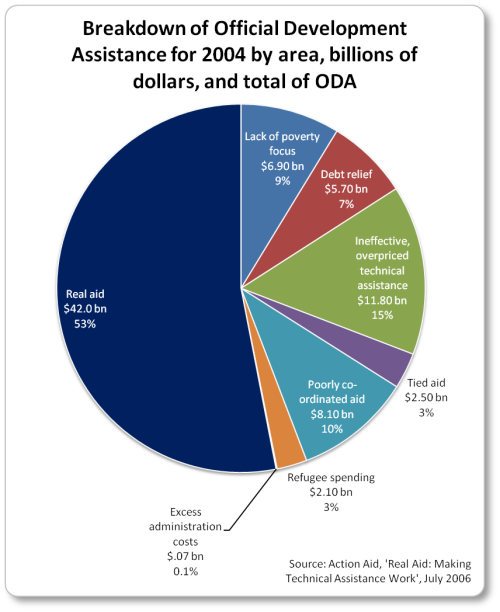
How much do we spend on foreign aid? Latest estimate I could find was about $80 billion a year in 2004, of which about half was "phantom aid" which didn't really help. So, consider. The net result is that the nations of the world have been financing US follies at home and around the world. At least until now.


Then consider one of those follies—the war in Iraq. It's pretty obvious that one of the main geopolitical reasons for this "war on terror" is to rein in China, by establishing bases near it and controlling its access to oil.

As a result of nearly everything in WalMart being built in China, I've heard that China holds $1.3 trillion in US dollars. Until now all China could do with these dollars is buy US treasuries. How long do you think China will continue to fund US attempts to threaten it?

Ok. On with the interview:

What policy reforms do you recommend that would be more protective of the interests of the average citizen?

In Greenspan’s Fraud I have shown that GDP and employment growth were much higher during the 1950s and the 1960s than between 1981 to 2004.We disregard the 1970s which were distorted by giant oil prices. My recommendation is that we go back to the policies that worked wonders in those earlier decades. These policies called for high income and corporate tax rates, a high minimum wage, but low Social Security tax rates. Creating a surplus in the Social Security Trust Fund through giant payroll taxes was a Greenspan-devised ponzi scheme that worked perfectly for its covert purpose, which was to preserve the pro-wealthy Reagan tax cuts and, subsequently, the Bush tax cuts.

What do you think will happen when Greenspan steps down in 2006 and how should investors prepare?

I am not sure if he will step down in 2006, because if President Bush fails to appoint anyone else as Fed chairman then Greenspan can legally stay on as an interim chairman until 2008. Currently, Greenspan is busy supporting Bush’s ventures to curry favor with the president. This has been the chairman’s modus operandi all along, namely to court those who are crucial to his position as the head of the Fed.

If Greenspan indeed steps down, it will turn out to be a non-event. The stock markets will remain sluggish for the entire decade, unless Greenomics is abandoned and new reforms are introduced.

What might we expect from a new Fed chairman and how could that change our current economy?

He or she is likely to be a Greenspan clone, because the maestro represents a consensus view of popular economics.

Labels: , , ,

Monday, August 13, 2007

1 Gigawatt Mag-Lev Windturbines from China—with a return on investment of 12 months!!??

I can't stop. Here's one more from gizmag.com:


July 31, 2007 — Sustainable generation of electric power is the key to realizing the vision of a world free from dependency on fossil fuels – the challenge is to ramp up the production of electricity to a level that can begin to approach the energy we get from burning coal and oil, without the perceived dangers of going nuclear. The combined threats of Peak Oil and global warming are spurring science into a furious new age of innovation. . . . almost daily breakthroughs in solar energy capture, battery technology and tidal energy harvesting, but the biggest contribution to green power thus far is coming from wind farming. The common windmill design used to capitalize on air currents, while centuries old, operates at around 1% efficiency in terms of the power it harvests from the wind, due to the deflective blade design and friction losses. But a new technology unveiled last year in China seeks to dramatically boost the output of wind-driven generators by using the virtually frictionless advantages of magnetically levitated turbines. Since there’s virtually no touching of moving parts, the MagLev wind turbine requires far less servicing than a traditional windmill – which dramatically lowers the operating costs to under five U.S. cents per kilowatt-hour. If projections are accurate, giant 1-gigawatt versions of these machines could have a 12-month ROI - a scenario sure to catch the eye of investors worldwide.

Magnetic levitation uses the repelling properties of magnets to lift an object off the ground. In this case, the object is a wind-harvesting fan. The benefit of having it floating in midair is that it cuts down on the friction that causes so much inefficiency in the traditional windmill-style wind energy harvester we see dotting our coastlines. Friction is also the key factor necessitating frequent maintenance of windmill turbines, adding considerably to the cost of running them.

Without rotational friction to overcome, a wind turbine generator can begin to harvest power from air speeds as low as 1.5 meters per second.

Chinese researchers unveiled a prototype MagLev wind generator device at the Wind Power Asia exhibition in June 2006. The devices were hailed as a huge breakthrough in a vast and spread-out country that has more than 70 million households with no electricity. One innovative possible use could be to harvest wind energy from passing cars on freeways to power the roadside lighting.

American company Maglev Wind Turbine Technologies believes that scale is the answer and has released plans for a massive-scale installation. Pointing out that the low power outputs of current windmill units render them cost-ineffective to install and repair, the company proposes the building of giant 1-gigawatt units, each the size of an office building.

The company proposes that a one-unit wind farm of such scale would be less than half the price of windmill generatorsof equivalent output - it would last longer, be cheaper to build and run and therefore result in higher profits. In ideal conditions such a plant could have a power output similar to a nuclear power station and a 12-month return on investment.

Labels: , , ,

Saturday, August 11, 2007

Bogus BushCo Econonics

from Counterpunch:

Paul Craig Roberts:August 9, 2007

Twenty-four hours after I reported China’s announcement that China, not the Federal Reserve, controls US interest rates by its decision to purchase, hold, or dump US Treasury bonds, the news of the announcement appeared in sanitized and unthreatening form in a few US news sources.

The Washington Post found an economics professor at the University of Wisconsin to provide reassurances that it was “not really a credible threat” that China would intervene in currency or bond markets in any way that could hurt the dollar’s value or raise US interest rates, because China would hurt its own pocketbook by such actions.

US Treasury Secretary Henry Paulson, just back from Beijing, where he gave China orders to raise the value of the Chinese yuan “without delay,” dismissed the Chinese announcement as “frankly absurd.”

Both the professor and the Treasury Secretary are greatly mistaken.

[. . .]

To understand the shortcomings of the statements by the Wisconsin professor and Treasury Secretary Paulson, consider that if China were to increase the value of the yuan by 30 percent, the value of China’s dollar holdings would decline by 30 percent. It would have the same effect on China’s pocketbook as dumping dollars and Treasuries in the markets.

Consider also, that as revaluation causes the yuan to move up in relation to the dollar (the reserve currency), it also causes the yuan to move up against every other traded currency. Thus, the Chinese cannot revalue as Paulson has ordered without making Chinese goods more expensive not merely to Americans but everywhere.

Compare this result with China dumping dollars. With the yuan pegged to the dollar, China can dump dollars without altering the exchange rate between the yuan and the dollar. As the dollar falls, the yuan falls with it. Goods and services produced in China do not become more expensive to Americans, and they become cheaper elsewhere. By dumping dollars, China expands its entry into other markets and accumulates more foreign currencies from trade surpluses.

Now consider the non-financial costs to China’s self-image and rising prestige of permitting the US government to set the value of its currency. America’s problems are of its own making, not China’s. A rising power such as China is likely to prove a reluctant scapegoat for America’s decades of abuse of its reserve currency status.

Economists and government officials believe that a rise in consumer prices by 30 per cent is good if it results from yuan revaluation, but that it would be terrible, even beyond the pale, if the same 30 percent rise in consumer prices resulted from a tariff put on goods made in China. The hard pressed American consumer would be hit equally hard either way. It is paradoxical that Washington is putting pressure on China to raise US consumer prices, while blaming China for harming Americans. As is usually the case, the harm we suffer is inflicted by Washington.

Paul Craig Roberts was Assistant Secretary of the Treasury in the Reagan administration. He was Associate Editor of the Wall Street Journal editorial page and Contributing Editor of National Review. He is coauthor of The Tyranny of Good Intentions. He can be reached at: paulcraigroberts@yahoo.com

Labels: , , ,

Web Site Counters
Staples Coupons