Thursday, June 10, 2010

Iceland's Black Report

Perhaps the most hopeful thing I've read since the economic meltdown of the world started a couple of years ago...

Truthout.org:

Banksters, Corrupt Politicians Face Prosecution - in Iceland

by: Sam Knight, t r u t h o u t | Report

photo
(Image: Jared Rodriguez / t r u t h o u t; Adapted: maty0609, ramenlover)

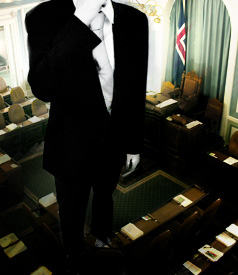
Calls for constitutional reform follow investigation into financial collapse; bankers, former government ministers face possibility of jail time.

Last month, the publication of an Icelandic Parliamentary report commissioned "to investigate and analyze the processes leading to the collapse of the three main banks in Iceland" shook the old guard on the island, leaving many of the country's rich and powerful facing the possibility of incarceration.

The long anticipated Black Report, as it is known, is seen by many Icelanders as crucial step toward recovering from its calamitous financial collapse of October 2008. The harsh critique of the old regime has presented Icelanders with an opportunity for reform not seen since the collapse itself and the Kitchenware Revolution of January 2009 that followed it, when thousands of angry demonstrators banging on pots and pans forced the government responsible for Iceland's boom and bust to resign.

"With this report, many windows that were closed have now been opened again," explained Left-Green Member of Parliament (MP) Ögmundur Jónasson.

Icelanders, he added, had been waiting for the report since December 2008, when the Special Investigative Commission (SIC) was first formed. The country has had to endure numerous painstaking delays, the last of which was intended to give those accused of criminal activity time to prepare their defense.

And while the delays may have been frustrating to a public desperate for answers, the end result - all 2,400 pages of it - was unexpectedly satisfying.

"Everyone was pleasantly surprised," said Haukur Magnússon, editor of The Reykjavik Grapevine, an English language magazine based out of Iceland's capital. "First, because no one believed it would come out. And secondly, no one expected it be well done. But they did a top notch job."

[. . .]
Labels: ,

Sunday, October 19, 2008

Next up: Switzerland, Ukraine, Lithuania, Latvia, Korea

Speaking of Iceland...

independent.co.uk:

"Is Switzerland the next Iceland?"

[. . .]

The woes of its banks, and UBS in particular, have rocked Switzerland, where the financial sector accounts for almost 15 per cent of output. The government said it did not intend to hold the stake in UBS for many years and hoped to sell it to private investors soon. It will impose changes in corporate governance and risk controls in return for the state's support.

The capital increase will lift UBS's tier one capital ratio to 11.5 per cent by the end of the year from 10.4 per cent. After its fundraising, Credit Suisse's tier one ratio would have been 13.7 per cent at the end of September, compared with the 10.8 per cent the bank reported.

[. . .]

Like other governments, Switzerland has acted to try to stop the financial crisis wreaking havoc on the wider economy. With banks refusing to lend to each other, the cost and lack of credit for small businesses and corporations threatens to turn the economic downturn into a punishing recession.

"This package of measures will contribute to the lasting strengthening of the Swiss financial system," the government said. "The resulting stabilisation is beneficial for overall economic development in Switzerland and is in the interests of the economy as a whole."

Ukraine and Baltic states also hit hard by the financial crisis

With even the mighty Swiss banking system needing government support, it will come as little surprise that a swathe of emerging market economies are suddenly looking fragile.

Ukraine emerged yesterday as the winner of the title "the next Iceland", with the International Monetary Fund offering the former Soviet republic up to $14bn (£8bn) to shore up its financial system. An IMF delegation landed in the country on Wednesday to try to stabilise the country's battered banking sector and ailing currency, hit hard by the global financial crisis. The central bank was forced to impose restrictions on deposit withdrawals and lending after panicked savers rushed to empty their accounts, draining the banking system of more than $1.3bn. The authorities also had to rescue two key banks and battle a sharp fall in the currency as the stock market plunged.

Ukraine emerged as the biggest crisis after Hungary agreed to borrow up to €5bn from the European Central Bank. Capital Economics warned that there were risks for a swathe of emerging European economies in the Baltics and the Balkans, including Lithuania and Latvia.

Their problem is that they have been living beyond their means by borrowing to finance increases in their standard of living.

Jitters spread to Asia yesterday after Standard & Poor's, the credit rating agency, warned that Korean banks would struggle to repay their debt.

Labels: , , , , , , ,

Iceland and Russia: Two Glimpses of the Future

Here are a couple of ominous stories:


www.bloomberg.com:

Icelandic Shoppers Splurge as Currency Woes Reduce Food Imports

By Chad Thomas

Oct. 13 (Bloomberg) -- After a four-year spending spree, Icelanders are flooding the supermarkets one last time, stocking up on food as the collapse of the banking system threatens to cut the island off from imports.

``We have had crazy days for a week now,'' said Johannes Smari Oluffsson, manager of the Bonus discount grocery store in Reykjavik's main shopping center. ``Sales have doubled.''

Bonus, a nationwide chain, has stock at its warehouse for about two weeks. After that, the shelves will start emptying unless it can get access to foreign currency, the 22-year-old manager said, standing in a walk-in fridge filled with meat products, among the few goods on sale produced locally.

Iceland's foreign currency market has seized up after the three largest banks collapsed and the government abandoned an attempt to peg the exchange rate. Many banks won't trade the krona and suppliers from abroad are demanding payment in advance. The government has asked banks to prioritize foreign currency transactions for essentials such as food, drugs and oil.

[. . .]

I've read that one of Iceland's desparate hopes is that Russia will help bail them out. Then I see this:

www.telegraph.co.uk:

Financial crisis: Moscow supermarket shelves increasingly empty in Soviet era reminder

Russian shoppers have been served an uncomfortable reminder of the Soviet era after finding shelves in some Moscow supermarkets empty, a further sign that the woes of the financial markets have begun to affect the mainstream economy.

For a generation of Russians who queued daily in the snow for the most basic of staples, the symbolism of a bare supermarket shelf is so powerful that it could potentially destroy the reputation of Vladimir Putin, the prime minister, as saviour of the world's largest country.

The shortages are not yet widespread. Even so, goods have begun to vanish from dozens of Moscow supermarkets over the past fortnight.

At a branch of the supermarket chain Samokhval in southwestern Moscow, a handful of shoppers pushed their trolleys through empty rows of shelves that once groaned under the weight of imported wares.

The deep freezes hummed, although there was nothing to freeze. Only a row of baked beans, a few jars of olives and sealed cupboards filled with vodka and cheap wine interrupted the void.

Unlike in the dying days of the Soviet Union, when the madcap policies of a bankrupt ideology inflicted deprivation across the country, today's shortages are very much rooted in modern Russia's enthusiastic embrace of capitalism.

Samokhval, which has 60 outlets across the capital, is the victim of a credit crunch whose tentacles have spread to virtually all sectors of the Russian economy. With trust a commodity in short supply, distributors have been unwilling to refinance the chain's debts and have stopped supplying.

Similar problems have affected Mosmart, which has 58 outlets and is also suffering from empty shelves.

The breadlines are unlikely to reform any time soon -- most supermarkets seem to be operating almost as normal -- yet such shortages seem extraordinary in a city that revels in its reputation as the world's most expensive.

A consumer boom, built on runaway oil prices, has turned Russians into some of the world's most aggressive spenders.

Yet the global financial crisis and investor jitters over Russia's increasingly aggressive foreign policy and its propensity to intervene in the private sector at the whim of the Kremlin have led to share prices tumbling.

The Moscow stock exchange's main indices lost over nine percent yesterday, and have fallen over two-thirds since touching all-time highs in May.

So rapidly have events moved that many Russians are almost unaware of the meltdown. A government-ordered news blackout of the market's woes has helped perpetuate the ignorance, convincing many that it was only the West that was affected. Tabloids have run stories claiming that Britons are so short of cash they can no longer bury their dead.

Despite the shortages, shoppers at Samokhval seemed either unconcerned or fatalistic.

"Life gets better, it gets worse," said Yevgenia Krasovskaya, a doctor. "Difficult times are followed by good times. Even if there is a little less now, what difference does it make so long as the basics are there? We've been through much worse than in the past." But Samokhval's checkout girls were more pessimistic.

"We're worried," said Svetlana, who would not give her surname as her supervisor was lurking nearby. "The management tells us everything will be ok, but I don't believe it."

Labels: ,

Web Site Counters
Staples Coupons